The Story of Emotions

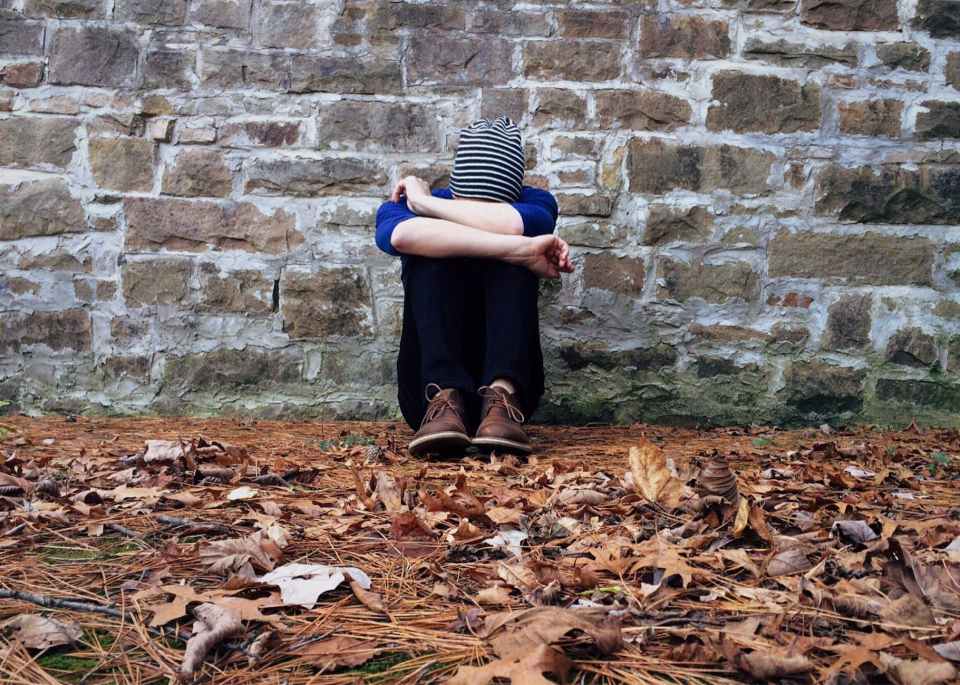
I often talk about trapped emotions, and the importance of releasing them, but what does it mean? Any emotion that has not been felt fully, will remain in our system until it has been. Essentially, it is a trauma. When people speak about trauma they often speak about very serious cases, but truth is, we all have them in different degrees. We all have some trapped emotions. I often refer to them as tension, because fundamentally, it is. The emotion, being a form of energy, wants to flow freely, but for some reason we hold it back, and the energy that we are using to push against it creates tension. Just like a dam functions to hold back water, we put up a dam to hold in energy, or emotion. It goes without saying that it drains our energy.

What I have learned is that when a situation cause more pain than we are willing to feel, we often try to escape it. There is a sub-conscious programming that takes over when we are unable to handle the situation consciously. To avoid the pain, our awareness may instead go into anger, hate, judgement, revenge, self pitty, or it may go into thinking about how things used to be better, or how things should be instead. Everyone does it differently, but we all do it, to some degree. Later, we may become aware of the pain we didn’t feel. We notice how it is still causing trouble in our life, so we want to get rid of it. A common mistake, which I have done so many times, is to try to go back in time, to that moment, and fix it. I replayed the memory over and over, analysing, changing perspectives or such, trying to fix my past. We cannot fix the past, because essentially the past does not exist. When the pain is fresh we brought our awareness out of the moment because we did not accept it, and later on, we realise the pain is still there, so we try to bring our awareness back in time to fix it, because we still do not accept the moment.

Lets say you’re enjoying a nice walk a beautiful summer morning. You listen to the birds, watch the few clouds on the sky and think about how wonderful your life is. Suddenly, some random person calls you stupid as he passes you on the street. You became so shocked by it that you didnt manage to respond in any way. You go on thinking how he was the stupid one. You then may continue thinking about various ways you could have responded. Before you know it, you’ve spent half an hour thinking about it. What you could have said and what you will say if you see him again. Then suddenly you realise, you went from being joyful to miserable, just because of this one word, spoken by someone you don’t even know. You become aware of the fact that you are now miserable, and you want to fix it. You track it back to the word that was uttered, and you may start to analyse the situation. Maybe you misheard him, or maybe he thought you were someone else. Maybe he didn’t actually speak to you, but was on the phone with someone…  In some way you are trying to go back in time and change it, so the present moment wont be such a misery. So much energy and time has been spent trying to avoid feeling the pain. Worst thing is, the pain may not even be that big, its just your sub conscious programming running the show. If too much tension like this is being accumulated, it may result in an ‘explosion’, and often with the people you feel most safe around, because with them you can let your guard down. You will let your guard down, and look for any reason for you to have a reaction, and you will most likely take advantage of the first opportunity you find. Your parents came five minutes late. Perfect anger release. BOOM! Your partner forgot to kiss you good-bye as he left for work. Perfect sadness release! BOOM! The smallest of things can blow out of proportions because of all the energy you have stored uses the situation as a catalyst to find expression. Although it is not a good way of releasing tension, it is at least being released, but this is not always the case. Sometimes it is getting stored for a long time, and with time it will start to manifest as physical ailments.


When there is pain in our life, either fresh or stored, it is only available in the present moment. The only way to release it, is to become fully present with it. Thats not to say, thinking about a memory is of no use. You can use your memory to trigger your emotions, but then, as soon as you bring up your memory you need to bring some of your awareness into bodily sensations. For example, you may feel some contraction in your belly, or the feeling of swelling in your throat. Then be with the sensation fully, without any resistance until it subside and you feel lighter and freer. You will notice that if you make any judgements about the sensations, or start having thoughts about it or anything else, it means you are not fully with it, and the feeling may subside but without the feeling of liberation after. It means you got distracted and did not manage to release it properly.


You may have already noticed how it’s almost as if stored emotions have a will of their own, and they are trying to find a way to be released. They will push you into similar situations, to try to trigger you into feeling them. If you pay enough attention, you will see just how much of your life is being run by them trying to get you into similar situations, and also how much of your life you spend trying to avoid them. They are screaming for our attention, yet we keep running.

If you start practicing being present in the moment and accept all thoughts and emotions as they appear in you, you will naturally start to heal and you will no longer accumulate more tension in your system. Whenever you feel triggered, take a breath and be with the emotions you are experiencing. As soon as you become aware of the fact that you have been triggered, a great freedom has reached you already, and from that place, you will be able to handle the situation a lot better, because you moved from compulsive behaviour to conscious presence.
 
Pain in life is inevitable, and there is no way of escaping it. You may keep it with you, or you may let it flow through you. We perceive pain as something bad, because it is unpleasant, but not a single pain in your life has come without a valuable lesson. 

Yoga Nidra

What is it?

Yoga Nidra is an extremely effective method of relaxing. Most of us live with chronic tensions that are the cause of all the agony we experience in modern life. Yogic philosophy, along with modern psychology, refers to three basic types of tensions. These are physical, emotional and mental tensions. Even in deep sleep, we carry these tensions.

The physical tensions are related to the body itself, the nervous system and endocrine imbalances. With Yoga Nidra, these tensions are easy to remove.

The emotional tensions come from various dualities such as love / hate, win / loss, success / defeat, happy / unhappy and so on, and these are more difficult to remove. This is because we are not able to express our feelings freely and openly. We sometimes refuse to acknowledge them, and rather suppress them. As a result, tensions take deeper and deeper roots and become more difficult to release. Even in sleep, it is not possible to relax these tensions. With Yoga Nidra, on the other hand, it is possible to numb our entire emotional structure and release these tensions.

Mental tension is the result of excessive mental activity. Our mind is a soup of fantasies, confusions and fluctuations. Throughout our lives, experiences are registered by our consciousness and accumulated in our mental body. Sometimes we can experience that these tensions explode and we experience anger, sadness, irritation, etc., and it is directed at completely insignificant and superficial things. This is then a result of our accumulated tensions on the mental level. Yoga Nidra is the science of relaxation that enables us to dive into the depths of the subconscious mind and free ourselves from accumulated tensions.

In this way, with Yoga Nidra we can create harmony in all levels of our being.

Yoga Nidra describes the state we’re in more than the practice itself. Yoga Nidra means ‘Sleep Yoga’, but it describes a different type of sleep than what we think of as sleep. In this case, we maintain an awareness while stepping into sleep. With an instructor as a guide, you are guided into deep relaxation while anchoring your consciousness firmly in the voice of the instructor. In this way we can systematically go in and make ‘sleep’ much more efficient. 1 hour in yoga nidra is therefor the same as 4 hours of normal sleep.

What are the benefits?

Yoga Nidra has a wide range of benefits. Through Yoga Nidra we can release traumas and memories that hang over us and affect our lives. We can let go of destructive or unwanted habits and addictions. We can reduce the amount of sleep we need, and therefore get more out of our lives. As we let go of the tensions we carry, we will also experience more energy and vitality. In Yoga Nidra we are also extremely receptive and can therefore reconstruct our personality and manifest the lives we want.

How does it work?

Yoga Nidra has a very scientific and systematic progress. There are several ways to practice depending on how much time you have and what you want to achieve with the practice. We can do a 10 minute practice that works great as a transition from a stressful day at work to time at home with the family. We can also use a similar practice that will quickly make you fall asleep. The more classic practice lasts approx. 60 minutes, but can be reduced to approx. 20 if we do not have more time.

Part 1) Remove distractions
The first thing to do is turn off the TV, radio, telephone or other things that can be distracting. Draw for curtains and make sure the room is dark but not completely dark.

Part 2) Yogasanas
Pain, stiffness and physical tension are major obstacles in yoga nidra practice. Therefore, it is ideal to practice Yoga Nidra after yoga asanas (the physical postures).

Part 3) Preparation
One lies down in the correct position, and mentally prepares to calm down the mind and body.

Part 4) Sankalpa
Sankalpa is Sanskrit, and ‘san’ means ‘to become one’ and ‘kalpa’ means ‘time’, and ‘subconscious mind’. Sankalpa is intention, and is used in advance of Yoga Nidra. This is like a kind of seed that we plant in the subconscious

Part 5) Rotation of consciousness
This part consists of moving our focus throughout the body, up to several times. Each body part is connected to a completely separate point in the brain. Some body parts, such as lips, nose, hands and fingers, have a much larger area in the brain, compared to their size. Together, these parts have almost as large a part in the brain as the rest of the body combined. They are therefore important aspects when we move our attention through the body. The specific position of the body parts in our brain is the reason for the systematic approach with specific order when we move our attention throughout the body. Once we have started with this sequence, it must not be changed as it induces a flow of energy / prana in the neuron circuit of the motor homunculus. This flow carries with it an experience of relaxation as a spontaneous dissociation of consciousness from the sensory and motor occurs. With regular practice, this flow becomes more efficient and happens faster and goes deeper.

Part 6) Breath
After the rotation of consciousness in the body, continues and complete physical relaxation with attention to the breath.

Part 7) Senses
Now we move on to the plane of feelings and emotions. Feelings that are physically or emotionally intense are evoked, experienced fully and completely, and then removed. This is usually done by using contrasts such as heavy / light, cold / hot, pain / pleasure, etc. When these emotions are paired, we harmonize the halves of the brain and create balance in our basic driving forces that normally lie in the subconscious.

Part 8) Visualization
In the last step of Yoga Nidra, work is being done on visualizing various images and symbols. This creates relaxation on the mental level. Because the images and symbols used often have universally important and powerful associations, they bring hidden content from the deep subconscious into the conscious mind. In this practice, the mind is cleansed of disturbing and painful material. Furthermore, this mind leads to dharana (concentration) and dhyana (meditation), and potentially even Samadhi.

Part 9) Sankalpa
After completing the practice, the intention is repeated

Part 10) Closing
After repeated sankalpa, we slowly return our attention to the body and space, and begin to move gently small muscle groups first before we finally open our eyes again.

Sources: Yoga Nidra by Swami Satyananda Saraswati