Yamas – Brahmacharya

Brahmacharya is the fourth yama in the 8 limbs of yoga. It means ‘right use of energy’, and often translated to celibacy. It actually translate to ‘behaviour that leads to brahman’ which in other words mean behaviour that leads to a higher power/the divine/god.

The second book of the Yoga Sutras, sutra no. 38 states:

“By one established in continence, visor is gained”

Brahmacharya means ‘the way to the Divine’. We are all looking for happiness and joy, whether it is consciously or unconsciously. When we do not find it, we often settle for pleasure. Pleasure can be beautiful but is very limited. The deeper we go into pleasure, the deeper we attach ourselves to it. If the thing or person you have attached yourself to is taken from you, you will be crushed. When we live in this way, our existence becomes one of great attachments, which creates a lot of suffering. When one practices brahmacharya, it means that we are not setteling with pleasure, but rather want to find the source of inner happiness.

In brahamacharya, it is the sexual temptations that are most talked about. Maybe it’s because they are the hardest temptations to resist, or maybe it’s because it’s the biggest pitfall. Many people associate brahmacharya with celibacy, but it is mainly about having self-discipline to resist pleasure because one has a desire to achieve something greater.

Brahmacharya challenges us to make more conscious choices and to be more present in what we do and why we do it.

The reason why sex can be a big pitfall is because here one will be very deeply involved and therefore it creates very large amounts of karma. By conserving our sexual energy, we also preserve not only physical energy, but also mental, moral, intellectual and spiritual energy. When this energy is preserved, it is transformed into a subtle energy (ojas), which tones the whole personality, builds nerves, improves brain power and calms the mind. This energy again is what becomes our glow or aura.

Yamas – Asteya

Asteya, the third yama in the 8 limbs of yoga. It means non-stealing. It sounds simple, but its because we usually think of stealing in the terms of materialism only. There are so many other things we can steal. Attention, credit, space, time, peace and so on.

When we look at Asteya it relates to behaviour caused by thoughts, or fluctations of the mind(Vritti). ‘I’m not good enough’ or ‘I don’t have enough’. The practice of yoga is about uniting and in many ways becoming whole.

In the second book of the Yoga Sutras, Sutra No. 37:

“To one established in non-stealing, all wealth comes.”

When we talk about stealing, we look at it from a deeper perspective than from society’s constructions. On a universal level, everything you take, without giving anything back is stealing. It could be the neighbor’s car, a bar of chocolate from the store, a flower from the meadow or a breath of fresh air. In order for us to survive, we have to take resources from nature, either directly or indirectly. When you just take without giving anything back, we carry an attitude where we take it for granted and that our life is more important than other forms of life. If we are to synchronize with unity, this attitude must go away. It’s not about counting every breath and making sure we give back what we owe, but if we find gratitude for everything that is available to us, we will naturally find a way to repay it. Without food, it is said that people die after approx. 30 days, without water it can happen in less than a week, and without air we only talk about minutes. Being aware of how fragile our lives are and how dependable we are can bring tremendous gratitude. By integrating gratitude into life, giving back will happen effortlessly, and our lives will become lives of service to others. 


Yamas – Satya

Satya is the second yama in the 8 Limbs of Yoga. It literally translates as ‘true essence’ or ‘unchangeable’. Even though our thoughts and emotions are interchangeable they form our own personal truths. As you may have experienced, what you once knew for certain, you later realised was not true.

In Sanskrit, the vibrations of the sounds in the words uttered have a direct connection to its meaning. The sound ‘sat’ holds the meanings; ‘unchangeable’, ‘that which has no distortion’, ‘that which is beyond distinctions of time, space and person’, and ‘reality’.

In yoga, we strive to find the truth of who and what we are. We search for that which is unchangeable, with no distortion and that is beyond distinctions of time, space and person. By calming the mind to such a degree that stillness happens, then we experience the unchangeable. We experience the truth.  

Even though we can look at truthfulness in many aspects of our lives, the essence of its practice is to un-identify with all we believe ourselves to be, as well as all our beliefs of what life outside ourself is. For truth to enter we must make room for it, and we do that by letting everything we think we know go.

The second book of the Yoga Sutras, Sutra No. 36 states:

“To one established in truthfulness, actions and their results become subservient.” 

This means that when one is well established in truth, our desires will manifest themselves effortlessly. Sri Swami Satchidananda writes: “If you are always truthful, if no lie comes from your mouth, a time will come when all you say will come true. Even if you say something by mistake, it will happen, because by the practice of Satya the words become so powerful and clean that honesty observes you. It wants to be with you always. If a curse is spoken, it will happen. If a blessing is said it will happen. The more we lead a life of honesty, the more we will see the results, and that will encourage us to be more honest. ” To lie is to try to manipulate reality. We cannot change what is by pretending  it to be different. Whether we lie to protect ourselves, or to protect others, it is a fear-based act that reinforces the feeling of separation. To lie is to create ripples in the reflection of the truth. A promise of absolute honesty means we can not even tell white lies. If honesty will lead to trouble, difficulties or harm to someone, we should rather remain silent. For example, instead of saying “I do not know”, we can be honest and say “I know, but I do not want to say.” By establishing oneself in honesty, comes the state of fearlessness. You do not have to be afraid of anyone and can always live an open life. When the mind becomes clear and real, our true ‘Me’ will reflect without deformity, and we understand truth in its own original nature

Yamas – Ahimsa

Within the 8 limbs of yoga, the first limb is called Yamas which means ‘control’ and represent a series of ethical guidelines. There are five yamas, where the first is called Ahimsa.

Ahimsa means non-violence or non-harm and should be applied to every living being, including oneself. It may be harming thoughts, behaviour or how we speak. Sometimes we cause harm indirectly, which is why many yogis become vegetarian or vegan. Some of the things we buy may often cause harm to the planet as well, so buying local and organic food is also a way of practicing Ahimsa.

As we reflect over our own behaviour, we may become aware of the fact that we are the cause of harm or violence to some degree. With this awareness you can react with guilt and shame, which is just another way of causing harm, or you can respond with compassion and forgiveness and choose to move forward in that direction.

As a yoga teacher I see a lot of people who try to push their bodies into postures that their body simply isn’t ready for. This is a way of causing harm too, but its not the only way people harm their bodies while practicing asanas. When your mind wanders your awareness of your body fades and so you don’t even notice that you’re harming yourself. Awareness is key!

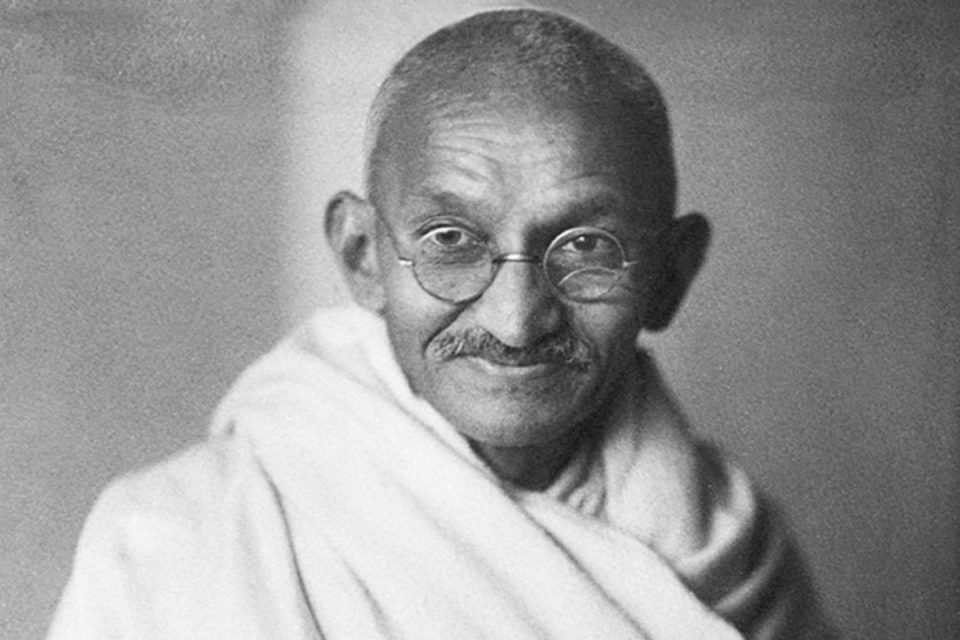
Mahatma Gandhi was a great yogi who was and is still known for his devotion to Ahimsa. He said, “Truth is my religion and ahimsa is the only way of its realisation”.

In the second book of the Yoga Sutras, sutra nr. 34 says:

“When negative thoughts or acts such as violence, etc. are done, caused to be done or even approved of- whether incited by greed, anger or infatuation- whether indulged in with mild, medium or extreme intensity, they are based on ignorance and bring certain pain. Reflecting upon this is also pratipaksas bhavana.“

In the second book of the Yoga Sutras, sutra nr. 35 says:


“In the presence of one firmly established in nonviolence, all hostilities cease”

Vulnerability

Our vulnerability can be a treasure chest

To be vulnerable is to let down your guard and open yourself to life. It might bring about epic transformation, but this is a two-way sword. If you open yourself without the necessary strength and insight to deal with what might come, it might cause great trauma as well. 

Let’s say you express your deepest love for someone and the person rejects you, it is your strength and insight that determines whether the experience will be transformative or traumatic. If you identify with what was rejected and hold on to that, you may never express your love like that again. With strength you are able to restrain from identifying with the experience and let go of any expectations, and you realise that even though the person rejected you, your love and happiness are still present and available to you. The transformation lays in realising what you are not. 

The more we let down our guard and open ourselves to life properly, the richer life become. Your relationships goes deeper, you become more passionate about the things you do, your perception of life increases, fear decreases- and love increases and you attract more of what you want in life. 

Your ability to make your vulnerability transformative is highly increased by practicing yoga. In yoga we strive to find something deeper than our thoughts and emotions. When you find yourself beyond this you will know that whatever emotions and thoughts you may have, there is a place deeper within you that is completely untouched. The more you get in touch with this, the safer you feel and the stronger you get. Before you know it, the situations that once made your knees weak becomes second nature to you. Your love is expressed freely and openly without any fear of rejection or expectations and your passions are done without the fear of not being good enough.